
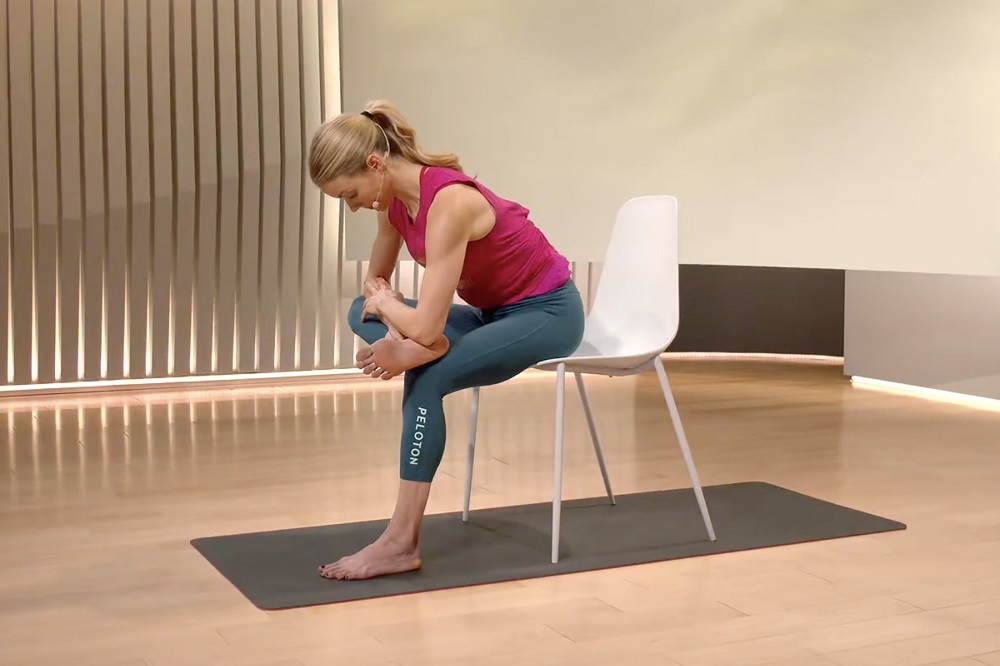

Long-haul travel combines extended sitting, disrupted sleep, luggage handling and irregular meals. A short chair yoga routine can reintroduce movement at several points during the journey without requiring a mat or deep stretching.
The goal is not to cancel the physical effects of flying in one session. It is to create manageable movement opportunities at the gate, after hotel check-in and when returning to the office.
Begin With Ordinary Movement
Yoga does not need to be the first or only response to prolonged sitting. Walking through the terminal, changing position and standing when appropriate are simple ways to vary movement.
At Changi Airport or another travel hub, the available space may be busy and public. Exercises should be discreet, stable and considerate of other travellers.
A chair can provide support, but airport seating may be fixed, low or connected in rows. The traveller should adapt to the furniture rather than forcing a planned routine.
Personal belongings must remain secure and out of walkways.
Use the Gate for Small Movements
The gate is not an exercise studio. A short sequence should fit the environment and avoid creating hazards.
Seated options may include:
- Slow ankle movement.
- Heel and toe raises.
- Gentle knee extension.
- Controlled upper-back rotation.
- Shoulder movement.
- Small weight shifts.
- Relaxed breathing.
If space permits, the traveller can stand behind a stable seat and perform a few supported heel raises or shallow knee bends.
Avoid using wheeled luggage as balance equipment. Handles can collapse or roll unexpectedly.
Movement Does Not Replace Medical Precautions
Long travel can involve health risks that yoga cannot prevent or treat by itself. Travellers should follow professional medical guidance relevant to their health and journey.
Unexplained chest pain, breathing difficulty or marked one-sided leg swelling and pain require urgent medical assessment. These symptoms should not be tested through stretching.
People with known medical concerns should ask a qualified healthcare professional about travel, compression garments, medication and appropriate movement.
Chair yoga can provide general movement variety, but it is not a medical intervention.
Use the Hotel Chair Carefully
Hotel furniture varies substantially. Some chairs are decorative, lightweight or unstable.
Before using one for support, check that it does not roll, swivel or tip. Place it on a firm surface away from loose rugs.
A post-flight hotel routine may include:
- Seated ankle and knee movement.
- Supported sit-to-stand repetitions.
- A shallow supported lunge.
- Gentle seated or standing rotation.
- Controlled arm movement.
- A short period of comfortable rest.
The sequence should remain easy enough to perform despite travel fatigue.
Deep stretching is unnecessary simply because the body feels stiff.
Account for Jet Lag and Coordination
Sleep disruption can affect balance and concentration. A normally easy standing exercise may feel less reliable after an overnight flight.
Use more support than usual and reduce complex transitions. The first hotel session should establish how the body responds rather than test fitness.
Dizziness, acute illness or unusual weakness are reasons to stop. Rest, food, hydration or professional care may be more appropriate.
Travellers should not attempt to compensate for missed workouts immediately after arrival.
Adapt to the Office Return
The first day back at work can add another long period of sitting. A brief chair sequence between meetings may help restore movement without requiring a full class.
Useful office movements include supported standing, gentle rotation and sit-to-stand practice. The routine should fit work clothing and available privacy.
Two or three short movement breaks may be more practical than one long session.
Employees should still have suitable workstations and reasonable opportunities to move. Chair yoga does not solve poor ergonomic or workload conditions.
Manage Luggage-Related Fatigue
Carrying bags can fatigue the shoulders, grip and trunk. Travellers may notice this more than leg stiffness.
A chair-supported session can include gentle shoulder movement without forcing large overhead ranges. The participant should avoid strong stretching through an area that feels painful or weak.
Luggage should be lifted using a manageable strategy, and unnecessary carrying should be reduced where possible.
Persistent pain or sudden weakness deserves appropriate assessment.
Hydration and Meals Influence the Routine
Flights can disrupt normal drinking and eating. A large meal immediately before a folded position may cause discomfort, while low energy can affect balance.
Drink gradually and eat according to individual needs. A chair routine does not need to be performed immediately after arrival if the traveller feels hungry, full or unwell.
Singapore’s outdoor heat also affects the return journey from the airport. A participant may need time to cool down before exercising in a hotel or at home.
The routine should fit recovery rather than become another obligation.
Build a Reusable Travel Sequence
At Yoga Edition, travellers can learn a small set of chair-supported movements before a trip and practise them under supervision. Familiarity makes it easier to adapt the routine to different locations.
The most effective travel sequence is simple enough to remember, safe enough for varied environments and short enough to repeat.
At the gate, the priority is discreet movement. At the hotel, it is restoring controlled range after sitting. At the office, it is preventing the travel day from becoming another full day without positional variety.
Chair yoga works during travel because it adapts to available space. It should support ordinary movement and recovery without promising to erase jet lag or replace appropriate medical precautions.

Comments are closed.